
The pursuit of scientific discovery found a meaningful new direction in rural India as SPACE India, in collaboration with the District Administration of Mahoba, Uttar Pradesh, successfully conducted a special Online Training Program from 13th May to 20th May, 2026, as part of the All India Asteroid Search Campaign (AIASC) 2026. Designed as a preparatory foundation for the student training phase, the initiative marked a significant step toward making advanced space science education accessible to young learners across diverse socio-economic and geographical backgrounds.
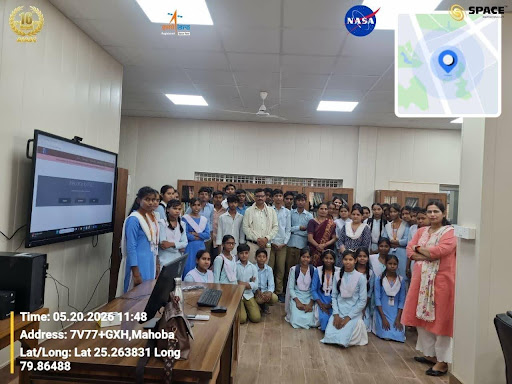
Bringing together educators from across the Mahoba district, the two-day training program aimed to equip teachers with the scientific understanding and technical skills required to guide students through the upcoming asteroid search campaign. More than 50 teachers actively participated in the sessions, engaging with concepts of astronomical imaging, asteroid detection, and real-time space research methodologies. Teachers from the Mahoba district participate in the special online AIASC 2026 training sessions organised by SPACE India.
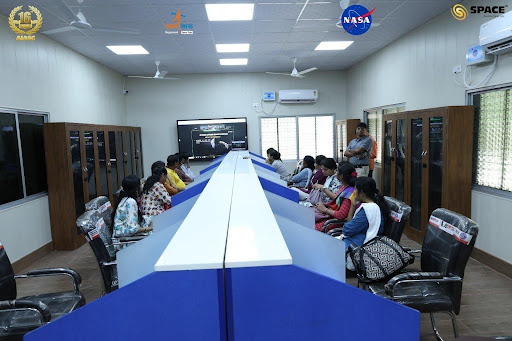
The significance of this initiative extends further with the launch of the student training phase on 14 May 2026, where more than 900 students from the Mahoba district have begun their journey into real space research under AIASC 2026. The training sessions, which will continue till 20th May 2026, are introducing students to the process of asteroid identification using authentic astronomical data provided through international collaboration.
At the heart of the program was the introduction to Astrometrica, a software widely used by researchers and scientists around the world for identifying and tracking asteroids. Through guided demonstrations and interactive discussions, teachers were trained to analyse real telescope image datasets, identify moving celestial objects, and understand the scientific process involved in preliminary asteroid discovery. What initially appeared to be highly specialised scientific work gradually unfolded into an engaging and accessible learning experience, empowering educators to bring authentic research practices into classrooms.
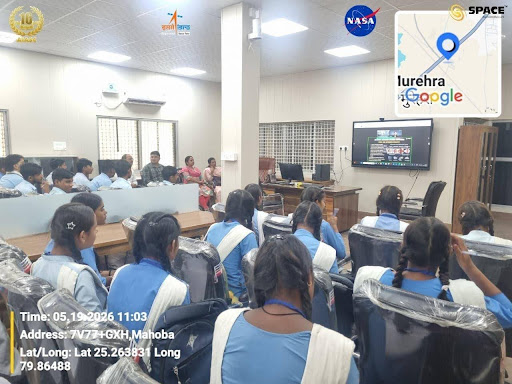
Participants explore asteroid detection techniques using professional astronomical software and real telescope data.
The training program was conducted entirely in Hindi through an online platform, ensuring that language and location would not become barriers to participation. The virtual format enabled teachers and students from rural regions of Mahoba to engage seamlessly from their schools, creating an inclusive environment for scientific learning and collaboration. The initiative reflects SPACE India’s continued commitment to democratizing STEM education and extending meaningful scientific opportunities to students beyond metropolitan centres.
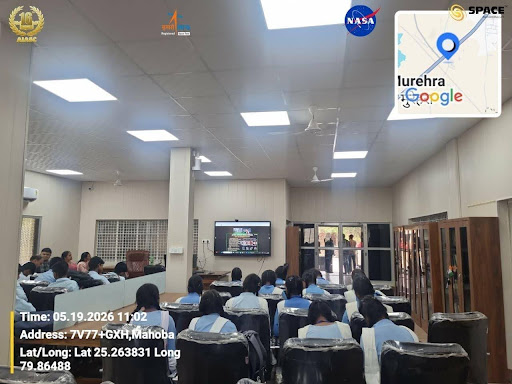
The AIASC 2026 student training program engages young learners from Mahoba in hands-on space research and asteroid discovery.
Organised every year in academic collaboration with the International Astronomical Search Collaboration, AIASC stands among India’s most distinguished student-led international space research campaigns. For the past sixteen years, SPACE India has enabled students across the country to participate in authentic scientific investigations, offering them opportunities to contribute to global astronomical research through preliminary asteroid detections and observational analysis.
The success of the Mahoba initiative was made possible through the active support and encouragement extended by the District Administration and local authorities, whose commitment toward promoting scientific thinking and STEM education has laid a strong foundation for such transformative programs in the region. Their collaborative efforts have reinforced the growing momentum toward integrating advanced scientific exposure into mainstream education for rural students.
As the student training phase approaches its concluding day tomorrow, the campaign stands as a remarkable example of how curiosity, technology, and education can come together to inspire the next generation of researchers and innovators. Through initiatives like AIASC 2026, SPACE India continues to nurture a culture where students are encouraged not only to learn science but to actively participate in its discovery—transforming distant celestial objects into gateways of possibility, ambition, and wonder.
