
A rocket built by a student does not need to travel very far to change the way science is understood.
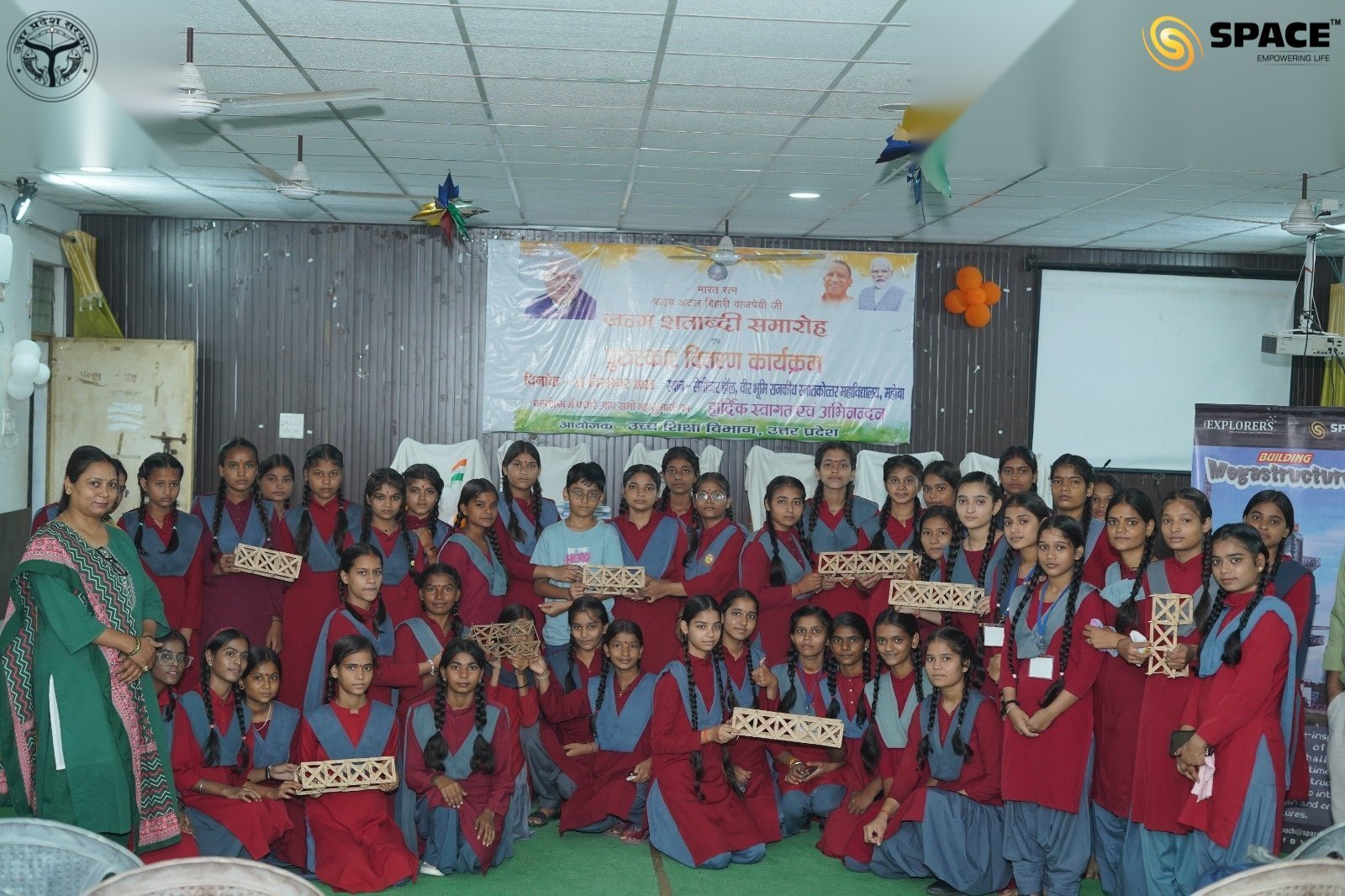
On National Space Day 2026, that idea came alive in Mahoba, where more than 400 students spent the day not simply listening to science, but experimenting with it. Organised by the District Administration, Mahoba, in collaboration with SPACE India, the initiative placed experience at the centre of learning.
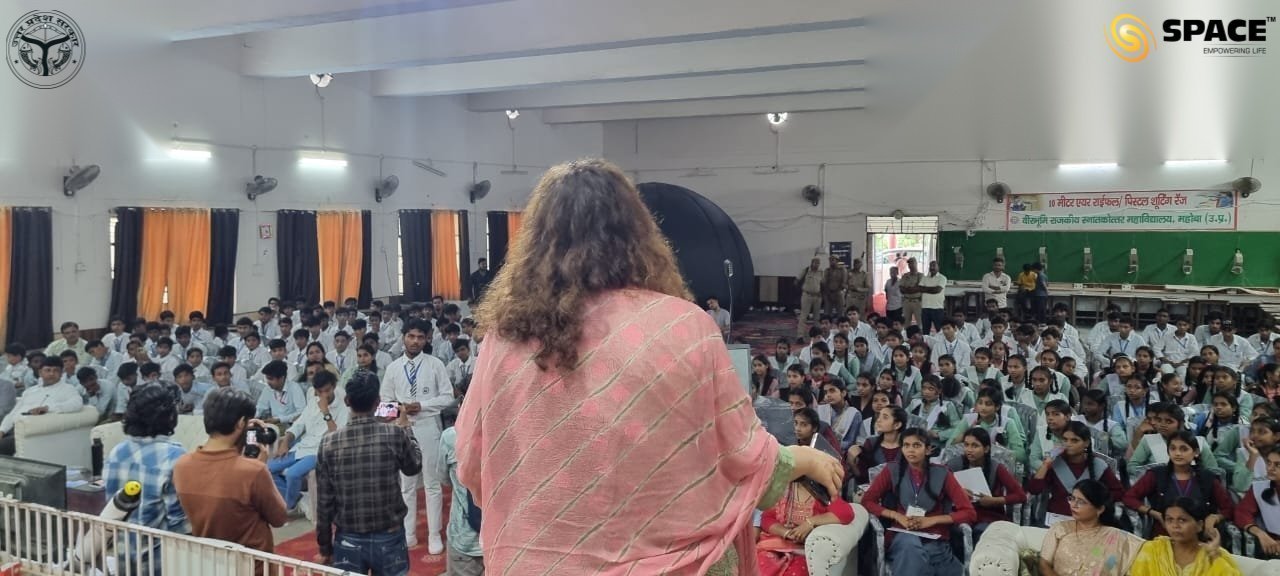
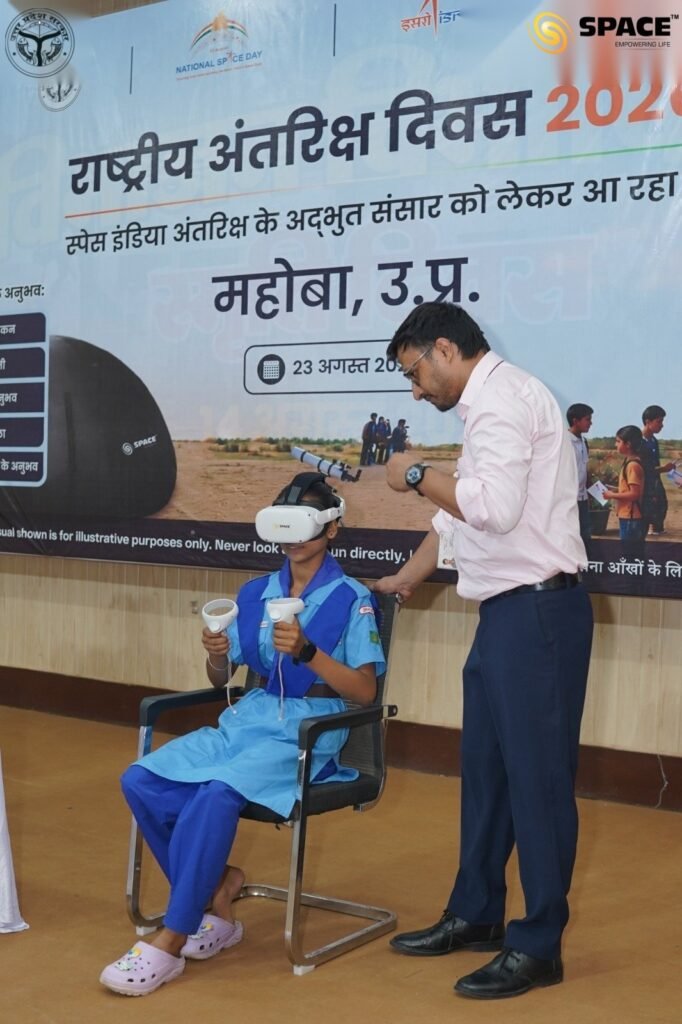
The transformation was visible in the simplest moments. A lesson on pressure became a water rocket rising into the air. Ideas of force, motion and trajectory became questions students could test for themselves. Astronomy moved beyond diagrams as students engaged with the Solar System, celestial objects and the tools that help us explore the universe.
When District Magistrate Smt. Gazal Bharadwaj, IAS, joined students for a water-rocket launch, it became more than a ceremonial moment. It reflected the larger purpose of the initiative—to create a culture where curiosity is encouraged and scientific learning is something students actively participate in.
That journey was already visible among Mahoba’s students. Young participants who successfully completed NASA’s All India Asteroid Search Campaign (AIASC) were recognised during the programme. Having worked with astronomical data as part of the campaign, their achievement represented an important shift: from being introduced to space science to contributing to a real scientific search.
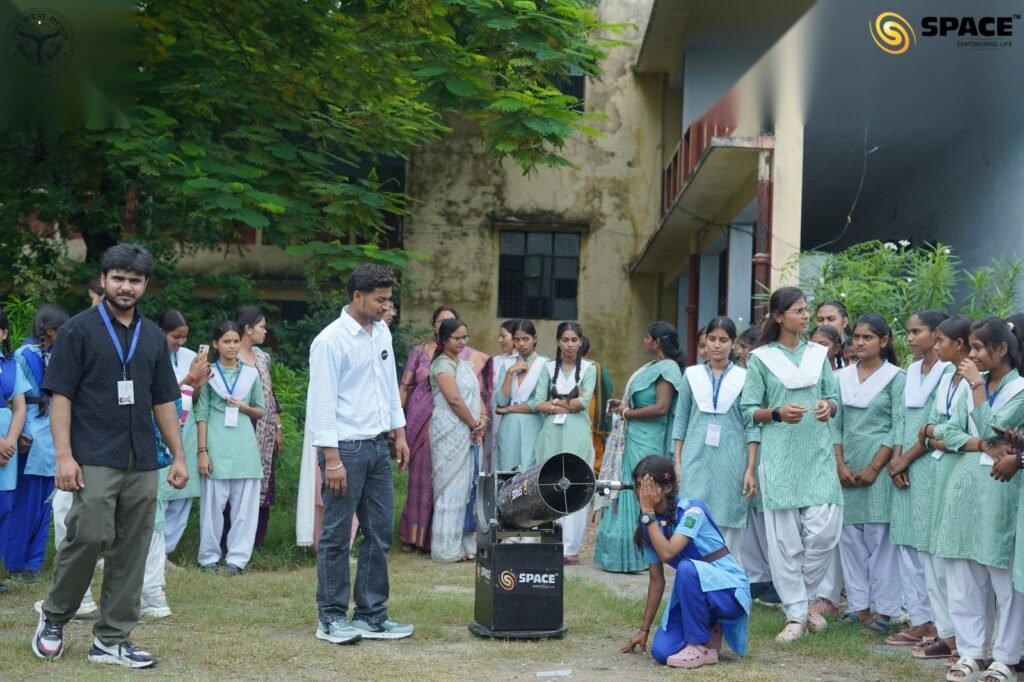
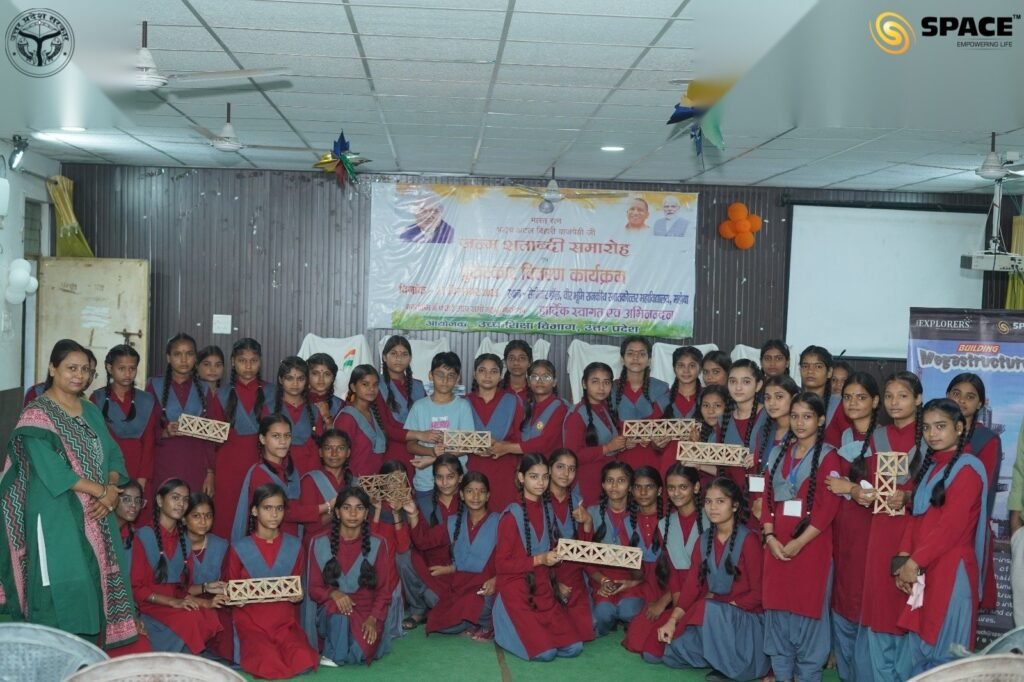
Students from schools across the district participated alongside children from Pratibha Khand Anathalaya, extending the opportunity to experience science to learners from different backgrounds.
For Mahoba, National Space Day was therefore about more than celebrating India’s achievements in space. It was about asking what those achievements can inspire next.
Because the distance between a classroom and the cosmos may be vast—but sometimes, all it takes to begin that journey is the chance to experiment.
